


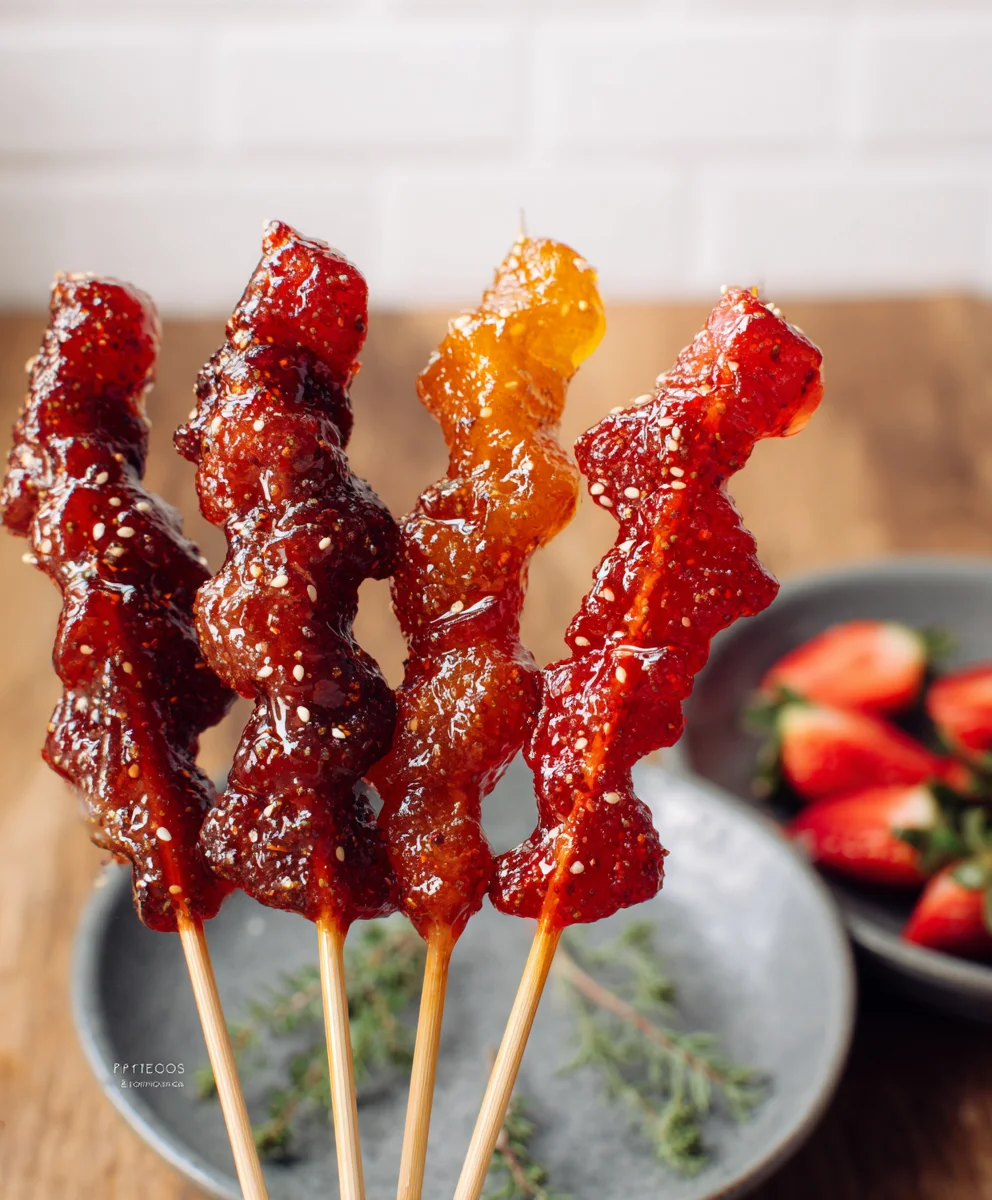
Tanghulu recipe instructions are surprisingly simple, making this delightful treat accessible to everyone, regardless of their culinary experience. There’s something undeniably magical about the crisp, caramelized shell giving way to juicy, vibrant fruit. This iconic Chinese street food has captured hearts and taste buds worldwide, and it’s easy to see why. The satisfying shatter of the candy coating, followed by the burst of sweet and tart fruit within, creates an addictive textural and flavor sensation. Whether you’re looking for a fun weekend project with the family or a unique dessert to impress guests, this tanghulu recipe is your gateway to mastering this beloved confection. Get ready to create edible jewels that are as beautiful to look at as they are delicious to devour!
Ingredients:
- 1 pound strawberries, washed, hulled, and dried thoroughly
- 1 cup granulated sugar
- 1/2 cup water
- 1/4 teaspoon cream of tartar (optional, but helps prevent crystallization)
- 10-12 wooden skewers or popsicle sticks
Preparing the Strawberries
Step 1: Berry Selection and Preparation
The first crucial step for a successful Tanghulu recipe is selecting the right fruit and preparing it properly. For this recipe, we’re using fresh strawberries. Choose strawberries that are firm, vibrant red, and free from any blemishes or soft spots. Wash them gently under cool running water, and then meticulously hull them by removing the green leafy tops. The absolute most important part of this step is ensuring the strawberries are completely dry. You can pat them dry with paper towels or a clean kitchen towel. Any moisture left on the berries will prevent the hardened sugar coating from adhering properly, leading to a sticky, unappealing result. If you’re using other fruits like grapes or cherry tomatoes, ensure they are also washed and thoroughly dried. For larger fruits, you might consider cutting them in half or quarters to make them more manageable to dip and eat.
Making the Candy Coating
Step 2: Dissolving the Sugar Mixture
Now it’s time to create that beautiful, glassy candy coating. In a medium saucepan, combine the granulated sugar and water. If you’re using cream of tartar, add it now. Cream of tartar is an acid that helps to break down some of the sugar molecules, which can prevent the sugar syrup from crystallizing into a grainy texture. This is especially helpful if you’re new to candy making. Place the saucepan over medium heat. Stir the mixture gently until the sugar is completely dissolved. You want to see no visible sugar granules at the bottom of the pan. Be patient with this step; rushing it can lead to uneven melting and potential scorching later on.
Step 3: Boiling and Reaching the Hard Crack Stage
Once the sugar has dissolved, stop stirring. Increase the heat to medium-high. You’ll want to bring the syrup to a boil. The syrup needs to reach the “hard crack” stage, which is approximately 300-310 degrees Fahrenheit (150-155 degrees Celsius). This is where the sugar is cooked to a point where it will harden into a brittle glass-like consistency when cooled. The best way to accurately gauge this is by using a candy thermometer. Insert the thermometer into the syrup, ensuring it doesn’t touch the bottom of the pan. Watch the temperature closely. If you don’t have a candy thermometer, you can perform the cold water test: carefully drop a small amount of the hot syrup into a glass of ice-cold water. If it forms hard, brittle threads that break easily, it’s ready. If it forms soft threads, it needs to cook longer. This stage is critical, so paying close attention to temperature or performing the cold water test is essential.
Coating the Fruit
Step 4: Dipping the Strawberries
Once the syrup reaches the hard crack stage, immediately remove the saucepan from the heat. This is where things happen quickly! Carefully insert the dried strawberries onto the wooden skewers, pushing them down about halfway to secure them. You want to have a good grip on the skewer for dipping. Now, holding a skewer with a strawberry, carefully and quickly dip the strawberry into the hot sugar syrup. Rotate the strawberry to ensure it’s evenly coated. Don’t over-dip, as this can lead to a too-thick coating. The goal is a thin, even shell. As you lift the coated strawberry out of the syrup, allow any excess syrup to drip back into the saucepan for a second or two. This helps create that signature thin, glossy finish. Work efficiently, as the syrup will begin extract to cool and thicken rapidly. If it becomes too thick to dip easily, you can briefly return the saucepan to very low heat for a few seconds to re-liquefy it, but be extremely careful not to scorch the sugar.
Step 5: Cooling and Setting the Tanghulu
Immediately after dipping each strawberry, place it on a parchment paper-lined baking sheet or a silicone mat. This prevents the Tanghulu from sticking to the surface as it cools and hardens. You’ll notice the sugar cogin extractng begin to solidify very quickly. It will transform from a molten liquid to a hard, glassy shell in a matter of minutes. Allow the Tanghulu to cool completely at room temperature for at least 15-20 minutes, or until the candy coating is fully hardened and brittle. You should hear a satisfying snap if you gently tap one of the coated fruits. Avoid the temptation to refrigerate them, as the moisture from the refrigerator can make the candy coating sticky and soft. Once fully set, your Tanghulu is ready to be enjoyed! Handle them gently, as the sugar coating can be delicate. You can store any leftover Tanghulu in an airtight container at room temperature for a day or two, but they are best enjoyed fresh for optimal crispness.
Conclusion:
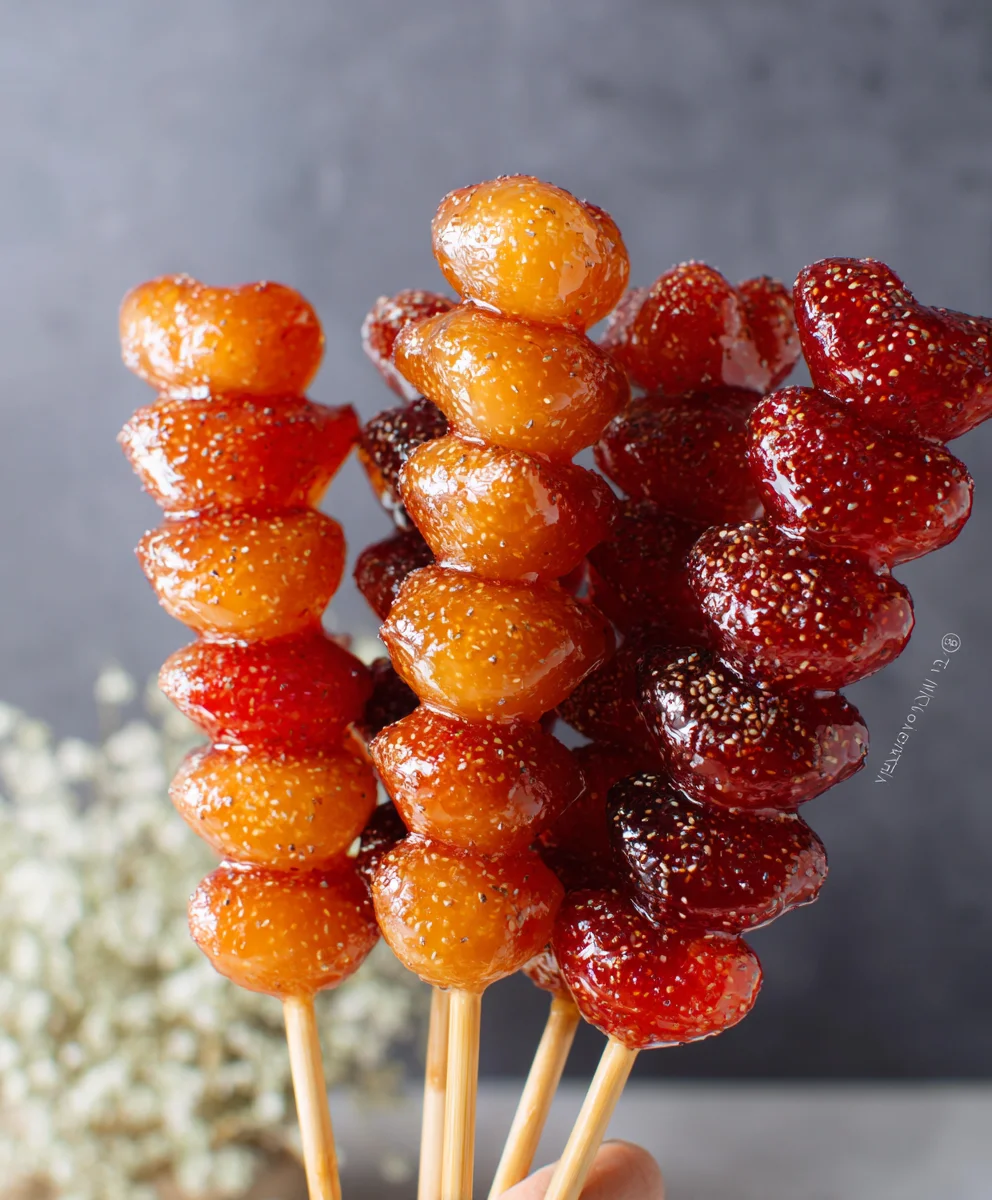
And there you have it – your step-by-step guide to making the most delightful Tanghulu Recipe! We’ve covered everything from selecting the perfect fruits to achieving that signature glossy, crunchy candy shell. This classic Chinese street food is not only a treat for the eyes but a fantastic burst of sweet and tangy flavor in every bite. I hope you feel inspired and confident to try this recipe yourself!
For serving suggestions, Tanghulu is best enjoyed fresh, shortly after the candy has hardened. They make a wonderful addition to any party platter, a fun activity for kids, or a simple yet elegant dessert. You can even present them on a decorative stand for a truly festive touch.
When it comes to variations, don’t be afraid to experiment! While strawberries and grapes are classic, consider using kiwi slices, mandarin orange segments, cherry tomatoes, or even chunks of apple. You can also play with the syrup by adding a drop of food coloring for a vibrant aesthetic, or a hint of fruit extract for an extra layer of flavor.
The most important thing is to have fun and enjoy the process. Don’t worry if your first attempt isn’t absolutely perfect; practice makes perfect, and the results are always delicious. So gather your ingredients, follow these steps, and get ready to impress yourself and your loved ones with this incredible Tanghulu Recipe!
Frequently Asked Questions:
What is the best type of fruit to use for Tanghulu?
While strawberries and grapes are the most traditional and widely popular choices, almost any firm fruit that can be easily skewered will work well. Think about fruits that have a good balance of sweetness and tartness to complement the sugary coating. Kiwi, cherry tomatoes, mandarin orange segments, and even apple slices are excellent alternatives.
My candy shell is sticky and not hard, what did I do wrong?
The most common reason for a sticky candy shell is not cooking the sugar syrup to the correct temperature. You need to reach the hard crack stage, which is around 300-310°F (150-155°C). Using a candy thermometer is highly recommended. If you don’t have one, you can test the syrup by dropping a small amount into ice-cold water; it should form hard, brittle threads. Also, ensure you are working in a dry environment, as humidity can affect the hardening process.
Easy Tanghulu Recipe – Sweet Candied Fruit Delight
A delightful recipe for making Tanghulu, a popular Chinese candied fruit snack with a brittle, glassy sugar coating.
Ingredients
-
1 pound strawberries, washed, hulled, and dried thoroughly
-
1 cup granulated sugar
-
1/2 cup water
-
1/4 teaspoon cream of tartar (optional, but helps prevent crystallization)
-
10-12 wooden skewers or popsicle sticks
Instructions
-
Step 1
Select firm, vibrant red strawberries. Wash them gently, hull them, and ensure they are completely dry by patting them with paper towels. Moisture will prevent the sugar coating from adhering properly. -
Step 2
In a medium saucepan, combine granulated sugar and water. Add cream of tartar if using. Stir over medium heat until sugar is completely dissolved, with no visible granules. -
Step 3
Stop stirring and increase heat to medium-high. Bring the syrup to a boil and cook until it reaches the hard crack stage, 300-310°F (150-155°C). Use a candy thermometer or the cold water test to verify. -
Step 4
Insert dried strawberries onto skewers. Carefully and quickly dip each strawberry into the hot sugar syrup, rotating for even coating. Allow excess syrup to drip off. -
Step 5
Immediately place coated strawberries on a parchment paper-lined baking sheet or silicone mat. Let them cool completely at room temperature for 15-20 minutes until the candy coating is hard and brittle.
Important Information
Nutrition Facts (Per Serving)
It is important to consider this information as approximate and not to use it as definitive health advice.
Allergy Information
Please check ingredients for potential allergens and consult a health professional if in doubt.

Leave a Comment