

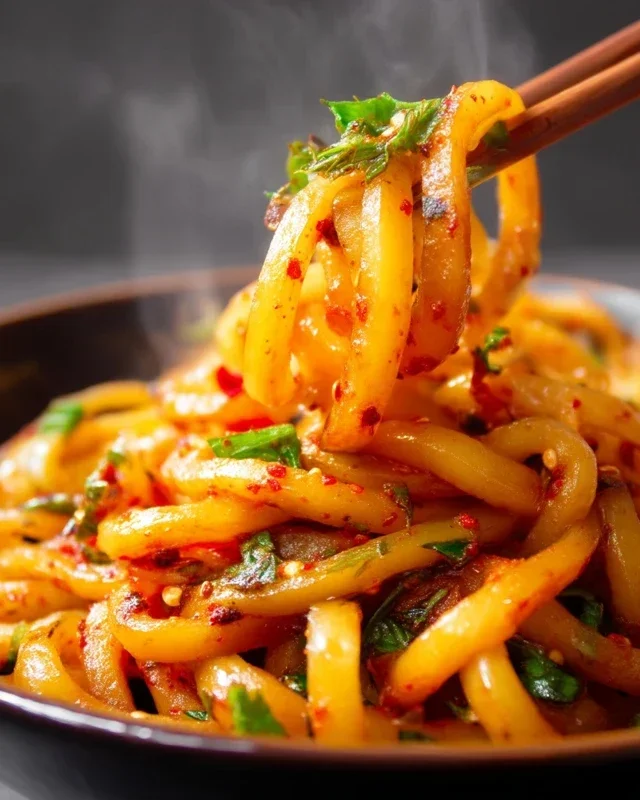
Spicy Potato Noodles are an absolute game-changer when it comes to comfort food with a kick! Have you ever craved something that’s both incredibly satisfying and delightfully fiery? That’s precisely the magic of this dish. It’s the kind of meal that warms you from the inside out, leaving you with a happy, contented sigh. What makes these Spicy Potato Noodles so beloved? It’s the ingenious use of potato as a noodle base, which lends an unbelievably tender and slightly chewy texture that’s completely unlike traditional pasta. Then, of course, there’s the sauce – a vibrant concoction of chili, garlic, and savory seasonings that’s addictive in the best possible way. This recipe delivers on all fronts, offering a flavor explosion that will have you reaching for seconds, and maybe even thirds!
Spicy Potato Noodles
Get ready for a flavor explosion! These Spicy Potato Noodles are surprisingly simple to make and deliver a fantastic chewy texture with a vibrant, spicy kick. Forget about store-bought noodles for a moment, because once you try making these from scratch, you might just find yourself hooked on the homemade goodness. They’re incredibly satisfying and adaptable, making them a weeknight dinner hero.
Ingredients:
Making the Potato Noodles
The foundation of these amazing noodles lies in the potatoes. We’re going to transform humble spuds into a delightfully chewy noodle base. This process requires a little patience, but the reward is well worth it.
Begin extract by preparing your potatoes. Place the peeled and cubed russet potatoes in a pot and cover them with water. Add ½ teaspoon of salt to the water. Bring the water to a boil and cook the potatoes until they are fork-tender, which should take about 15-20 minutes. You want them to be soft enough to mash easily. Once tender, drain the potatoes thoroughly. It’s crucial to get as much water out as possible at this stage to prevent your noodle dough from becoming too sticky later on. Transfer the hot, drained potatoes to a large bowl and mash them until they are smooth. You can use a potato masher, a ricer, or even a sturdy fork for this. The smoother you get the potatoes, the smoother your noodles will be. Let the mashed potatoes cool slightly for about 5-10 minutes. They should still be warm, but not so hot that they’ll burn your hands.
Now, it’s time to incorporate the potato starch. Add 1½ cups of potato starch to the warm mashed potatoes. Gradually add ½ cup of warm water, a little bit at a time, while mixing. It’s best to use a wooden spoon or a sturdy spatula at first, as the mixture will be quite sticky. Continue mixing and kneading the dough until it comes together into a cohesive, smooth, and slightly tacky ball. The exact amount of water might vary slightly depending on the moisture content of your potatoes, so add it slowly. If the dough feels too dry and crum extractbly, add another tablespoon of water. If it feels too wet and sticky, add a little more potato starch, about a tablespoon at a time, until you reach the right consistency. Knead the dough for about 5-7 minutes until it’s elastic and no longer sticking excessively to your hands or the bowl. This kneading process is important for developing the chewy texture of the noodles.
Shape the noodles. On a lightly floured surface (use a bit more potato starch for this), divide the dough into 2-3 equal portions. Roll each portion into a long log, about ½ to ¾ inch in diameter. Think of it like making playdough snakes. Once you have your logs, you can either slice them directly into noodles or flatten them slightly and then slice them. To slice them into noodles, use a sharp knife to cut the logs into ½-inch thick pieces. If you prefer a flatter noodle, gently press down on the log with the palm of your hand to flatten it slightly before slicing. You can also dust your knife with potato starch to prevent sticking. As you cut the noodles, place them on a baking sheet lined with parchment paper, making sure they don’t stick together. You can gently toss them with a little extra potato starch if needed.
Cook the noodles. Bring a large pot of salted water to a rolling boil. Carefully add the fresh potato noodles to the boiling water. Don’t overcrowd the pot; cook them in batches if necessary. Stir the noodles gently as soon as you add them to prevent them from sticking to the bottom of the pot or to each other. The noodles will sink to the bottom at first. Once they float to the surface, they are almost done. Cook them for an additional 2-4 minutes after they float, depending on their thickness, until they are tender and chewy. They should have a satisfying bite. Use a slotted spoon to scoop the cooked noodles out of the boiling water and immediately transfer them to a colander to drain. You can rinse them briefly under cool water to stop the cooking process and prevent them from sticking, but this is optional.
Prepare the spicy sauce. While your noodles are cooking or draining, whisk together the sauce ingredients in a medium bowl. Combine 2 tablespoons of regular soy sauce, 2 tablespoons of Chinese black vinegar, 2 tablespoons of gochugaru (adjust to your spice preference), 1¼ teaspoons of granulated sugar, and ⅛ teaspoon of salt. Mix until the sugar and salt are dissolved. This sauce is where all the vibrant flavor comes from, so don’t be shy with it!
Assembling the Dish
Now for the best part – bringin extractg everything together into a delicious, flavorful meal.
Sauté the aromatics. Heat 3 tablespoons of neutral oil in a large skillet or wok over medium heat. Add the minced garlic and sliced green onion. Sauté for about 1-2 minutes until fragrant, being careful not to burn the garlic. This step infuses the oil with a lovely garlicky and oniony flavor, which will then coat your noodles.
Combine and toss. Add the drained, cooked potato noodles to the skillet with the sautéed garlic and green onions. Pour the prepared spicy sauce over the noodles. Toss everything together gently but thoroughly to ensure each noodle is coated in the delicious sauce. Cook for another 1-2 minutes, allowing the noodles to absorb some of the sauce and heat through.
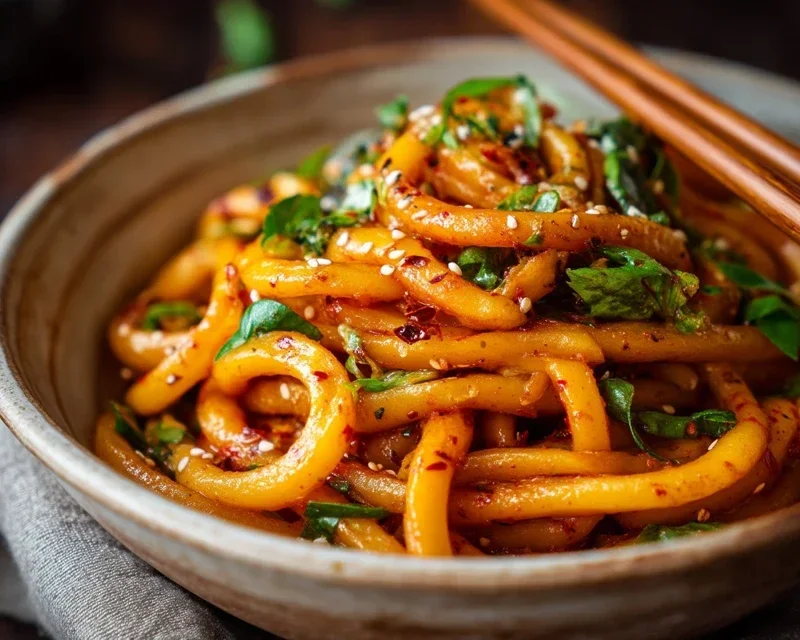
Finish and serve. Remove the skillet from the heat. Stir in the roughly chopped cilantro. The fresh herbs add a wonderful brightness that cuts through the richness and spice. Serve immediately in bowls. You can garnish with extra sliced green onions or a sprinkle of sesame seeds if you like. Enjoy the chewy, spicy goodness of your homemade Spicy Potato Noodles!
Conclusion:
I hope you’re as excited about these Spicy Potato Noodles as I am! This recipe is a true winner because it’s incredibly flavourful, surprisingly easy to make, and uses readily available ingredients to create something truly special. The star of the show is undoubtedly the tender potato noodles, which soak up all the delicious spicy sauce, offering a delightful chew and a comforting base for the vibrant flavours. It’s a fantastic option for a quick weeknight meal or an impressive dish to share with friends.
I love serving these Spicy Potato Noodles with a side of crisp, steamed greens like bok choy or broccoli to balance the richness. You can also top them with a sprinkle of toasted sesame seeds, chopped scallions, or even a fried egg for an extra boost of flavour and texture. Don’t be afraid to get creative with variations! If you prefer less heat, simply reduce the amount of chili paste. For a vegetarian or vegan option, ensure your chili paste is vegan and consider adding pan-fried tofu or tempeh. This recipe is wonderfully adaptable to your preferences. I truly encourage you to give these Spicy Potato Noodles a try – I’m confident you’ll be hooked!
Frequently Asked Questions:
Can I make these noodles ahead of time?
While the noodles are best enjoyed fresh, you can prepare the sauce mixture a day in advance and store it in the refrigerator. When you’re ready to cook, simply boil your potato noodles and then toss them with the reheated sauce.
What kind of potato is best for the noodles?
Waxy potatoes, such as Yukon Gold or red potatoes, tend to hold their shape better when boiled and have a creamier texture, making them ideal for these potato noodles.
Is there a way to make the sauce less spicy?
Absolutely! You can adjust the spice level by reducing the amount of chili paste used. You can also add a touch of honey or maple syrup to the sauce to help balance the heat if it becomes too intense.
Spicy Potato Noodles
Chewy and spicy potato noodles with a savory sauce, perfect for a quick and flavorful meal.
Ingredients
-
1.1 pounds russet potato (peeled and cut into 1 inch pieces)
-
½ teaspoon salt
-
1½ cup potato starch
-
½ cup water (warm)
-
2 tablespoons regular soy sauce
-
2 tablespoons Chinese black vinegar
-
2 tablespoons gochugaru (coarse)
-
1¼ teaspoons granulated sugar
-
⅛ teaspoon salt
-
2 tablespoons garlic (minced)
-
1 stalk green onion (sliced)
-
3 tablespoons oil (any neutral oil)
-
⅓ cup cilantro (roughly chopped)
Instructions
-
Step 1
Boil the potato pieces in salted water until fork-tender. Drain well and mash into a smooth paste. -
Step 2
Gradually mix in the potato starch until a cohesive dough forms. Add a little more starch if too sticky, or a tiny bit of water if too dry. -
Step 3
Divide the dough into portions and roll into ropes about ½ inch thick. Cut the ropes into 3-4 inch noodle lengths. -
Step 4
Boil the noodles in water until they float and are slightly chewy, about 3-5 minutes. Drain and rinse with cold water. -
Step 5
In a bowl, whisk together soy sauce, Chinese black vinegar, gochugaru, sugar, and the ⅛ teaspoon salt. -
Step 6
In a separate pan, heat the oil over medium heat. Sauté the minced garlic until fragrant, then add the green onion and cook for another minute. -
Step 7
Add the drained noodles and the sauce mixture to the pan with the garlic and green onion. Toss well to coat. Cook for 1-2 minutes until heated through. -
Step 8
Serve immediately, garnished with chopped cilantro.
Important Information
Nutrition Facts (Per Serving)
It is important to consider this information as approximate and not to use it as definitive health advice.
Allergy Information
Please check ingredients for potential allergens and consult a health professional if in doubt.


Leave a Comment