


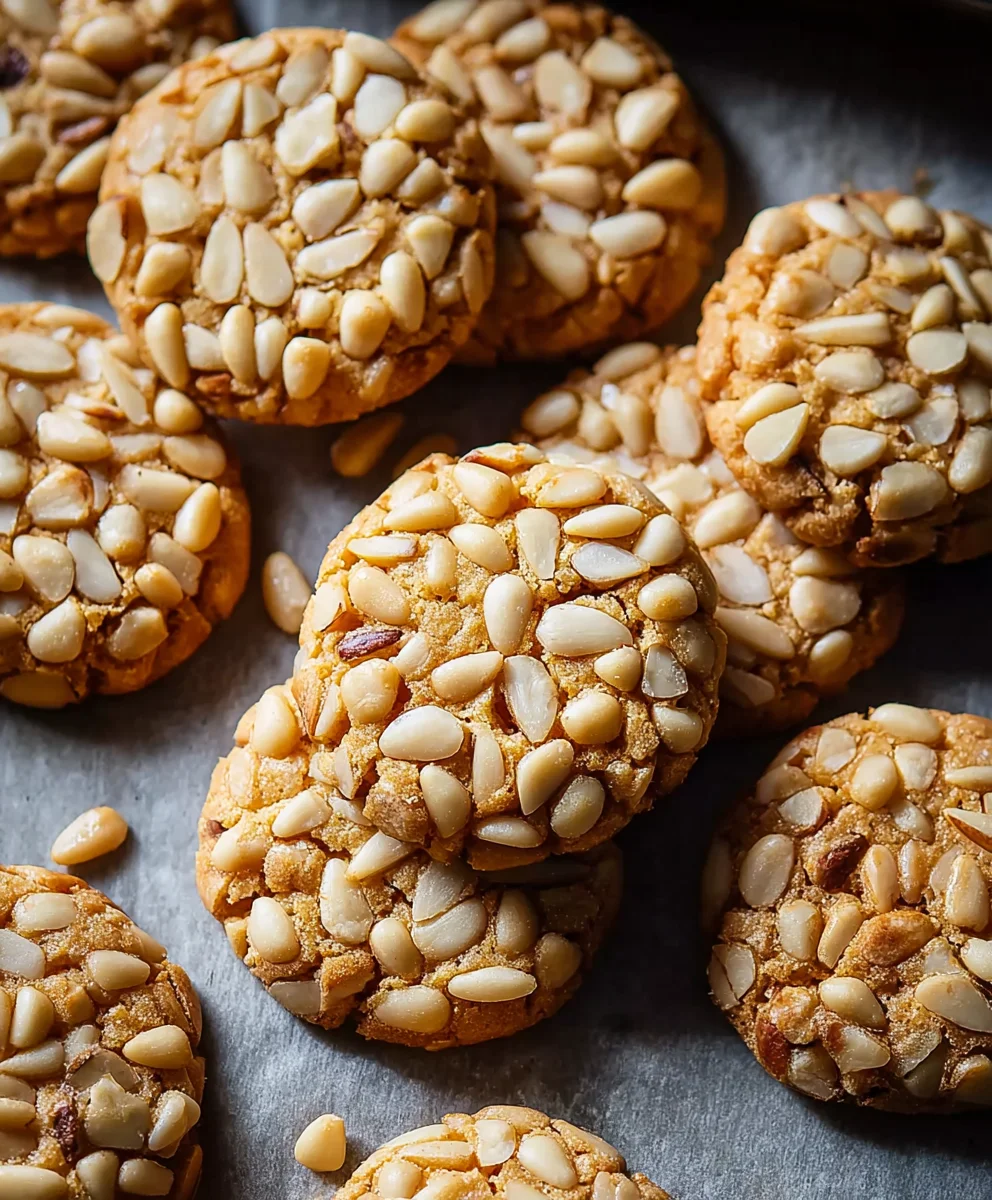
Pignoli Cookies are more than just a sweet treat; they’re a taste of sunshine and Italian tradition baked into every bite. If you’ve ever savored the delicate crunch of these exquisite cookies, you know exactly what I mean. There’s something incredibly alluring about the golden, toasted pine nuts encasing a tender, almond-scented dough. They’re the perfect accompaniment to a steaming cup of coffee, a sophisticated addition to any dessert platter, or simply a delightful pick-me-up on a quiet afternoon. What truly makes Pignoli Cookies so special is their deceptive simplicity. Despite their elegant appearance, they’re surprisingly straightforward to make at home, allowing you to bring a piece of Italian heritage into your own kitchen. Get ready to impress yourself and your loved ones with this timeless classic!
Ingredients:
- 7 ounces (198g) almond paste, at room temperature
- 1/2 cup (100g) granulated sugar
- 1 large egg white
- 1/4 teaspoon kosher salt
- 1 cup (140g) pine nuts
Preparing the Pignoli Cookie Dough
The foundation of perfect Pignoli cookies lies in a well-prepared almond paste base. To start, I like to ensure my almond paste is at room temperature. This makes it much easier to work with and incorporate smoothly into the dough, preventing any lumps and ensuring a consistent texture throughout your cookies. If your almond paste is a bit firm, you can gently knead it in its packagin extractg for a minute or two, or microwave it in very short bursts of 5-10 seconds, being careful not to overheat it.
In a medium-sized mixing bowl, combine the softened almond paste and the granulated sugar. Using a sturdy spoon or a rubber spagin extracta, begin to cream these two ingredients together. This process is similar to creaming butter and sugar for other cookies. You want to work them until they are well combined and the mixture starts to look lighter and fluffier. It might take a few minutes of vigorous stirring, but the effort is well worth it for the delicate texture of the final cookie. Don’t rush this step; a properly creamed almond paste base will lead to a wonderfully tender cookie.
Next, it’s time to add the egg white and salt. Crack your large egg white into a small bowl and whisk it lightly with the 1/4 teaspoon of kosher salt. Adding the salt at this stage helps to dissolve it evenly into the egg white and also contributes to tenderizing the cookie dough. Now, gradually add this egg white mixture to the almond paste and sugar blend. Continue to stir and mix until everything is thoroughly incorporated and you have a smooth, slightly sticky dough. The dough will be quite soft at this point, which is exactly what you want. It will firm up slightly as it chills.
Shaping and Toasting the Pine Nuts
Before we shape the cookies, let’s prepare our star topping: the pine nuts. To get the most flavor and a beautiful golden hue on your Pignoli cookies, it’s best to lightly toast the pine nuts beforehand. You can do this in a dry skillet over medium-low heat. Keep a close eye on them, as pine nuts can go from perfectly toasted to burnt very quickly. Stir them constantly until they become fragrant and just start to turn a light golden brown. This usually takes about 3 to 5 minutes. Immediately remove them from the skillet and spread them out on a plate or small baking sheet to cool completely. This prevents them from continuing to cook in the residual heat of the pan.
Once the pine nuts have cooled, pour them into a shallow dish or a small bowl. This will be where you roll your cookie dough balls to coat them generously with the toasted pine nuts.
Forming and Baking the Pignoli Cookies
Now comes the fun part: shaping the Pignoli cookies. Preheat your oven to 350 degrees Fahrenheit (175 degrees Celsius). Line two baking sheets with parchment paper. This is a crucial step to prevent the cookies from sticking and to ensure easy cleanup.
Using a small cookie scoop or two teaspoons, portion out the dough. Aim for balls that are about 1 inch in diameter. Don’t worry about making them perfectly round at this stage. Gently roll each dough portion between your palms to form a rough ball. Then, take each dough ball and roll it in the dish of toasted pine nuts, pressing gently to ensure the nuts adhere all over the surface. You want a good, even coating of pine nuts. Place the coated dough balls onto the prepared baking sheets, leaving about 2 inches of space between each cookie to allow for spreading.
As the Pignoli cookies bake, they will spread slightly and the pine nuts will turn a beautiful golden brown. Bake them for approximately 12 to 15 minutes, or until the edges are lightly golden and the centers are set. The baking time can vary depending on your oven, so it’s always a good idea to start checking them around the 10-minute mark. You want them to be cooked through but still soft and slightly chewy in the center. Overbaking will result in a dry, hard cookie.
Once they are baked to perfection, carefully remove the baking sheets from the oven. Allow the Pignoli cookies to cool on the baking sheets for about 5 to 10 minutes. This allows them to firm up enough to be moved without falling apart. After they have cooled slightly on the sheets, use a spatula to transfer them to a wire rack to cool completely. This is where they will achieve their final texture. Once completely cool, your delicious, nutty Pignoli cookies are ready to be enjoyed!
Conclusion:
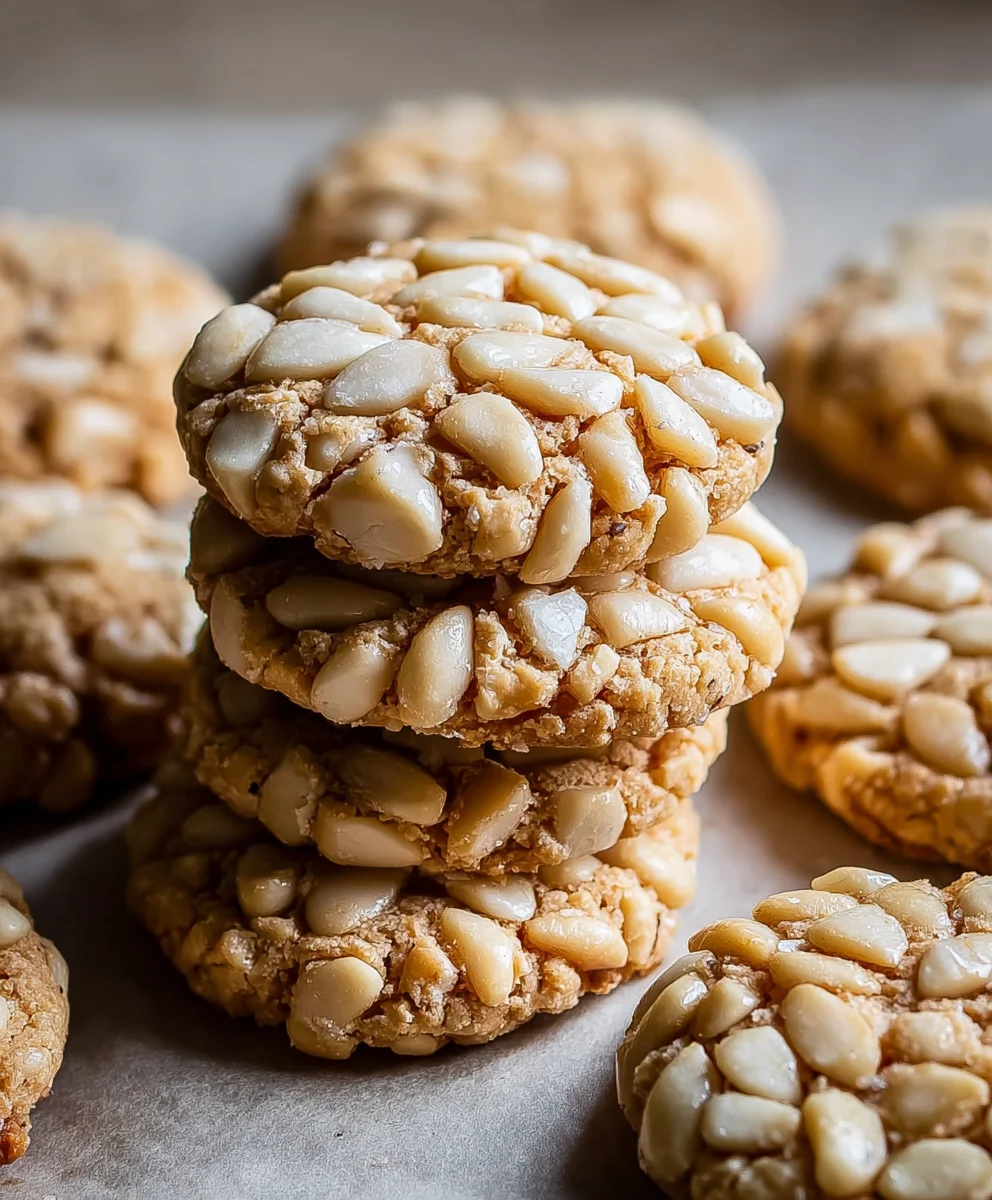
I hope you enjoyed learning how to make these delightful Pignoli Cookies! This recipe delivers a wonderfully crisp exterior with a chewy, slightly nutty interior, all thanks to the star ingredient – pine nuts. These Pignoli Cookies are more than just a treat; they’re a little bite of sunshine and a testament to simple, high-quality ingredients. They are perfect for any occasion, from a casual afternoon tea to a more formal dessert spread. Don’t be intimidated by the ingredient list; it’s all straightforward and the results are incredibly rewarding.
For serving suggestions, these cookies are fantastic on their own, but they also pair beautifully with a cup of coffee or a glass of milk. Consider placing a small bowl of them out when guests arrive, or packing them into a tin as a thoughtful homemade gift. If you’re feeling adventurous, try adding a pinch of lemon zest to the dough for a brighter flavor profile, or even a touch of almond extract for a deeper nutty undertone. Experiment and make them your own! I encourage you to give this recipe a try; I’m confident you’ll fall in love with these classic Italian cookies just as I have.
Frequently Asked Questions:
Can I substitute the pine nuts with other nuts?
While pine nuts are essential for the authentic flavor and texture of Pignoli Cookies, you can experiment with other finely chopped nuts like almonds or pistachios if pine nuts are unavailable. However, please be aware that this will change the classic taste and appearance of the cookies.
How should I store my Pignoli Cookies?
Store your Pignoli Cookies in an airtight container at room temperature. They will stay fresh and delicious for up to a week. For longer storage, you can freeze them in a single layer on a baking sheet, then transfer them to a freezer-safe bag or container for up to three months.
Authentic Pignoli Cookies
An easy Italian recipe for authentic Pignoli cookies featuring a tender almond paste base coated generously in toasted pine nuts.
Ingredients
-
7 ounces (198g) almond paste, at room temperature
-
1/2 cup (100g) granulated sugar
-
1 large egg white
-
1/4 teaspoon kosher salt
-
1 cup (140g) pine nuts
Instructions
-
Step 1
Ensure almond paste is at room temperature. In a mixing bowl, combine softened almond paste and granulated sugar. Cream together with a spoon or rubber spatula until well combined, lighter, and fluffier. -
Step 2
Lightly whisk egg white with kosher salt in a small bowl. Gradually add this mixture to the almond paste and sugar blend, stirring until thoroughly incorporated into a smooth, slightly sticky dough. -
Step 3
Toast pine nuts in a dry skillet over medium-low heat, stirring constantly until fragrant and lightly golden brown (about 3-5 minutes). Remove from skillet and spread on a plate to cool completely. -
Step 4
Preheat oven to 350°F (175°C). Line two baking sheets with parchment paper. Portion dough into 1-inch balls. Roll each ball in the toasted pine nuts, pressing gently to coat. -
Step 5
Place coated dough balls on prepared baking sheets, leaving 2 inches between cookies. Bake for 12-15 minutes, or until edges are lightly golden and centers are set. Check around 10 minutes. -
Step 6
Let cookies cool on baking sheets for 5-10 minutes, then transfer to a wire rack to cool completely.
Important Information
Nutrition Facts (Per Serving)
It is important to consider this information as approximate and not to use it as definitive health advice.
Allergy Information
Please check ingredients for potential allergens and consult a health professional if in doubt.

Leave a Comment